If you are deciding between a single-family home and a townhome in Miami Shores, the choice is not just about square footage. It is about how you want to live day to day, how much control you want over your property, and how comfortable you are with shared rules and shared spaces. In a village known for its small-town feel and detached-home character, understanding those tradeoffs can save you time, money, and second-guessing. Let’s dive in.
Miami Shores housing at a glance
Miami Shores is a small village of just under 3.75 square miles, and its housing pattern is still heavily shaped by owner-occupied detached homes. The U.S. Census Bureau reports an 87.5% owner-occupied rate, which helps explain why the community feels stable and residential.
The housing mix also tells a clear story. In the 2019-2023 ACS housing structure data, Miami Shores had 11,623 housing units, including 6,901 detached single-unit homes, or 59.4% of the stock, compared with 890 single-unit attached homes, or 7.7%. In simple terms, single-family homes are the dominant option, while townhome-style inventory is limited.
Village planning documents reinforce that pattern. Miami Shores describes itself as a residential community with a small-town atmosphere, with predominantly single-family land use, small-scale commercial corridors, and only a handful of multifamily dwellings and townhomes.
Why this comparison matters
In some markets, single-family homes and townhomes are evenly spread across many neighborhoods. Miami Shores is different. Detached homes are the standard housing type, while townhomes are a more specific, planned product.
That matters because your lifestyle choice is tied closely to local supply and local rules. In Miami Shores, you are not just comparing two home styles. You are comparing two very different ownership experiences within a village that places real value on residential scale, streetscape, and neighborhood character.
Single-family living in Miami Shores
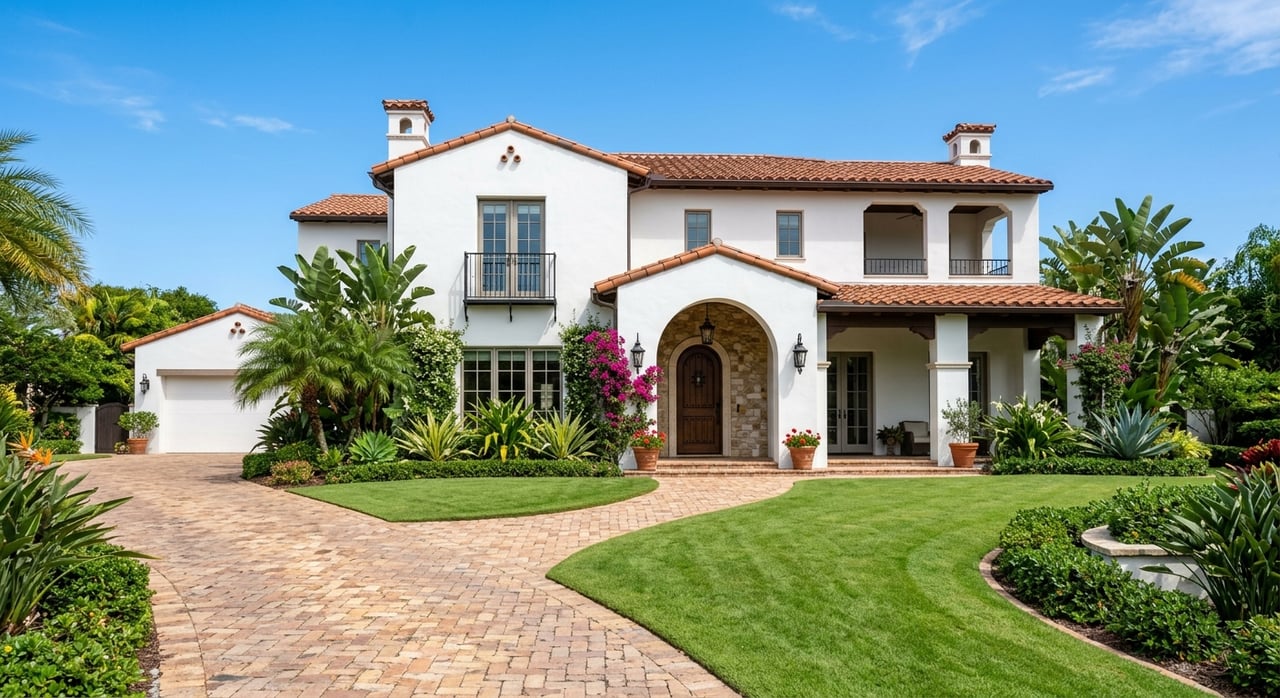
Single-family living is the core of Miami Shores' housing identity. Village workshop materials state that Miami Shores is essentially all R-1 zoning, with lots commonly around 7,500 to 10,000 square feet and most lots around 9,300 square feet.
That larger-lot pattern usually gives you more private outdoor space and more direct control over how you use your property, within village rules. If you want room for landscaping, a patio, a pool, or future improvements, a single-family home often gives you more flexibility than an attached option.
The village code is also designed to preserve the one-family residential character. According to the village workshop materials, the stated purpose of the R code is to preserve and enhance that pattern while limiting intensification that would detract from it.
What buyers often like about single-family homes
A single-family home in Miami Shores may be a better fit if you value:
- More private land
- More separation from neighbors
- More room for outdoor features
- More freedom to plan improvements within local rules
- A housing type that matches the village’s dominant pattern
That does not mean there are no limits. Miami Shores still regulates the look and scale of residential properties. In R districts, fences and walls are limited to 3.5 feet in front yards and 6 feet in side and rear yards, which helps maintain an open front-yard streetscape.
What to keep in mind
More control usually comes with more responsibility. With a single-family property, you are typically responsible for maintaining the lot, landscaping, and exterior areas yourself, rather than sharing those duties through an association structure.
For many buyers, that tradeoff is worth it. For others, especially those who want less day-to-day upkeep, it can feel like more property than they want to manage.
Townhome living in Miami Shores
Townhomes exist in Miami Shores, but they are not the village default. They are allowed through the Community Residential, or CR, district, which was created to broaden and diversify the housing stock.
The CR district permits attached multifamily dwellings and townhouses at up to 13 dwelling units per gross acre. These projects must be at least 23 gross acres, provide at least 35% common open space, and meet minimum lot-area standards of 1,600 net square feet per unit and 1,800 net square feet on average.
This is important because it shows that townhome living in Miami Shores is planned and structured from the start. It is not scattered in the same way detached homes are spread across the village.
How townhome ownership works
In the CR district, townhouse ownership is fee simple, but common areas are owned and maintained by a condominium or homeowners association. The code also requires association review documentation when an exterior modification request goes to the village.
That setup creates a different ownership experience from a detached home. You may own your individual unit, but shared areas and exterior standards are part of a broader community framework.
The code also requires townhouse communities to fit into the existing street grid. That supports a more planned, compact environment than a typical detached-home block.
What buyers often like about townhomes
A townhome in Miami Shores may appeal to you if you want:
- A smaller footprint
- Less private yard area to maintain
- Shared open space
- A more managed community structure
- A housing option that may feel more compact and efficient
Because common areas are maintained collectively, some buyers appreciate having fewer individual outdoor maintenance obligations. That can be attractive if you want a more streamlined day-to-day routine.
What to keep in mind
The tradeoff is usually more shared oversight. Since common areas are association-maintained and exterior modifications require association review documentation, townhome ownership often means fewer opportunities to change the exterior on your own timeline or without approval.
If you prefer maximum control over the look and use of your property, that may feel restrictive. If you value structure and predictability, it may feel helpful.
Single-family vs townhome: key differences
Here is the simplest way to think about the comparison in Miami Shores:
| Factor | Single-Family Home | Townhome |
|---|---|---|
| Housing supply in Miami Shores | Dominant housing type | Limited minority of stock |
| Lot control | More control over full lot | More shared structure and common areas |
| Outdoor space | Typically more private yard space | Typically less private yard space |
| Maintenance | More individual responsibility | More shared responsibility for common areas |
| Exterior changes | Governed by village rules | Governed by village rules plus association review structure |
| Setting | Detached residential pattern | Planned, compact community framework |
The best choice depends on how you balance privacy, maintenance, and control. Miami Shores makes that contrast especially clear because the village has distinct rules and a strong detached-home identity.
Budget matters in both choices
No matter which property type you prefer, carrying costs should be part of the conversation from the start. According to the Census Bureau, the median value of owner-occupied housing units in Miami Shores is $864,400, the median monthly owner cost with a mortgage is $3,709, and the median gross rent is $2,657.
Those numbers are a reminder that your monthly budget matters just as much as your purchase price. When comparing a single-family home and a townhome, it helps to think beyond the list price and look at the total cost of ownership.
For example, a single-family home may offer more space and control, but it can also mean more direct upkeep. A townhome may reduce some individual maintenance tasks, but the ownership structure includes shared common areas and association oversight that should be understood clearly before you buy.
Miami Shores rules are worth watching
Miami Shores is actively revisiting residential regulations. In 2025, the village held workshops on the single-family R code focused on setbacks, roof heights, lot coverage, driveway standards, accessory structures, and landscaping.
That matters because local rules shape what you can do with a property over time. If you are choosing between a detached home and a townhome, future plans for additions, outdoor improvements, or exterior changes should be part of your decision-making early on.
How to choose the right fit
If you are still deciding, start with your daily lifestyle rather than the floor plan alone. Ask yourself whether you want more private land and more direct control, or a smaller footprint with more shared structure.
A single-family home often makes sense if you want privacy, room to personalize, and a property type that matches the core pattern of Miami Shores. A townhome may make more sense if you want a more compact home, shared open space, and a community framework that handles some responsibilities collectively.
In a market like Miami Shores, where detached homes dominate and attached options are limited, clarity matters. The more honest you are about your budget, maintenance preferences, and comfort with rules, the easier it is to narrow the search and move with confidence.
If you want help comparing homes, understanding how Miami Shores inventory fits your goals, or moving quickly when the right property hits the market, Andres Sanchez is ready to help you shift into high gear and cross the finish line with confidence.
FAQs
Is Miami Shores mostly single-family homes or townhomes?
- Miami Shores is mostly single-family homes. Census housing data shows detached single-unit homes make up 59.4% of the housing stock, while single-unit attached homes make up 7.7%.
Are townhomes common in Miami Shores?
- No. Townhomes are a limited housing type in Miami Shores and are allowed through the Community Residential district rather than serving as the village’s default housing pattern.
What is the main lifestyle difference between single-family and townhome living in Miami Shores?
- Single-family living usually offers more private land, more yard control, and more room for improvements within village rules, while townhome living usually offers a smaller footprint, shared open space, and more association structure.
Do townhomes in Miami Shores have association oversight?
- Yes. In the Community Residential district, common areas are owned and maintained by a condominium or homeowners association, and exterior modification requests require association review documentation when submitted to the village.
Why do local rules matter when buying in Miami Shores?
- Local rules matter because Miami Shores actively regulates residential scale and design details such as setbacks, roof heights, lot coverage, driveway standards, accessory structures, and landscaping, which can affect how you use or improve a property.
Is Miami Shores an owner-occupied market?
- Yes. The U.S. Census Bureau reports an 87.5% owner-occupied housing rate in Miami Shores, which supports its residential, small-town character.