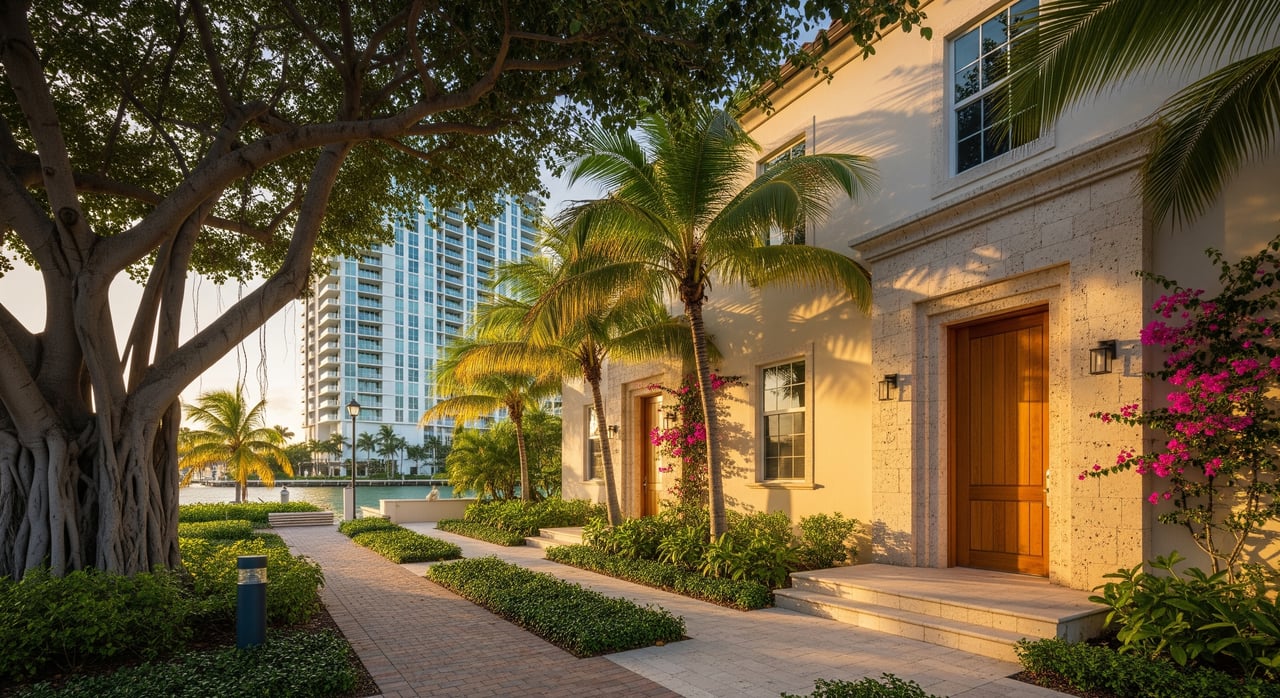
Trying to choose between a condo and a townhouse in Coconut Grove? You are not alone. The Grove’s coastal setting, mature tree canopy, and mix of buildings make the decision feel big. By the end of this guide, you will understand how ownership, costs, financing, insurance, and lifestyle differ so you can move forward with confidence. Let’s dive in.
Quick comparison: condo vs townhouse
| Topic | Condo | Townhouse |
|---|---|---|
| Ownership | You own the interior of your unit plus a share of common elements. | You typically own the home and the land parcel, often fee simple. |
| Governance | Condominium association under Florida Condominium Law. | Often a homeowners’ association or planned community rules. |
| Maintenance | Association usually maintains exterior, roof, and building systems. | You often maintain exterior and roof, depending on CC&Rs. |
| Insurance | You carry an HO-6 policy for interior and contents, association insures common elements. | You typically carry a full homeowners policy insuring the structure and contents. |
| Fees | Often higher monthly dues covering building systems and amenities, with reserves and potential special assessments. | Often lower dues if fewer shared amenities, but can vary by community. |
| Financing | Extra project approvals and eligibility checks can affect loans and rates. | Usually financed like single-family homes with fewer project-level hurdles. |
| Lifestyle | Lower maintenance, amenities, and on-site services are common. | More privacy, a garage or driveway, and private outdoor space are common. |
| Rentals | Condo bylaws often restrict short-term rentals and lease minimums. | HOA rules may also limit rentals, but policies vary by community. |
What defines each option
Condominiums in Florida
A condo is a legal form of ownership where you own your unit’s interior and share ownership of common elements like the roof, exterior, and amenities. Associations operate under Florida Condominium Law, which outlines governance, assessments, reserves, and rules. You can review the statute in Florida Statutes Chapter 718.
Townhouses in Florida
“Townhouse” describes attached homes that are often fee simple, where you own the structure and land. Many are part of an HOA or planned community with covenants that set maintenance duties and rules. These communities are generally governed by declarations and the HOA framework in Florida Statutes Chapter 720.
Costs to compare in Coconut Grove
Association fees, reserves, and assessments
Condo fees often cover building systems, exterior upkeep, and amenities. That can mean higher monthly dues and the need to watch reserves and special assessment risk. Townhouse fees vary. If the HOA maintains roads, gates, or a pool, dues can be meaningful. Ask for the budget, reserve study, insurance certificate, meeting minutes, and any pending assessments.
Insurance and storm exposure
In the Grove’s coastal setting, windstorm and flood exposure matter for both property types. Condo owners typically carry an HO-6 policy for the interior while the association insures the building shell. Townhouse owners usually carry a full homeowners policy for the structure. Flood insurance is a separate policy and may be required by lenders in mapped flood zones. Check your property’s flood status using the FEMA Flood Map Service Center, and discuss coverage options with your carrier or explore state resources at Citizens Property Insurance.
Property taxes
Miami-Dade taxes are assessed by parcel. You will pay taxes on your unit or home and the land interest that comes with it. To evaluate tax history and assessed values, use the Miami-Dade County Property Appraiser. If you plan to occupy the home as a primary residence and qualify, you can explore homestead exemption benefits through county resources.
Financing: what lenders look for
Condo financing specifics
Lenders evaluate both you and the condo project. They review the building’s budget, reserves, occupancy mix, insurance, and litigation status. Project eligibility can affect your loan options and interest rate. You can read general project standards at Fannie Mae and check FHA condominium requirements through HUD. Work with your lender early to confirm project eligibility before you fall in love with a unit.
Townhouse financing
If the townhouse is fee simple, most lenders treat it like a single-family home. There is usually no project approval required, which can make underwriting simpler. You will still need to qualify based on your income, assets, credit, and the property’s appraisal.
Coconut Grove lifestyle fit
Location and day-to-day living
If you value low maintenance living with amenities like a pool, gym, or front desk, a condo can be a strong fit. If you want a garage, private outdoor space, and more control over your exterior, a townhouse can deliver that feel without the upkeep of a large single-family lot. In the Grove, many buyers also weigh walkability to places like CocoWalk, nearby parks, and marina access.
Building age and resilience
Coconut Grove includes both older mid-rise and high-rise condos and a smaller number of townhouse communities. Building age matters for inspections, reserves, and future repair needs. After recent years of heightened scrutiny in Florida, lenders and associations are focused on building condition and reserve funding. Ask pointed questions about structural work, envelope upgrades, roofs, and future capital plans.
Resale and investment considerations
- Scarcity can support value. In many Grove sub-areas, townhouses are less common, which can help pricing if demand is strong.
- Condo resale strength often tracks the association’s financial health, insurance, and amenities. Buildings with solid reserves, clear maintenance plans, and reasonable dues tend to attract more buyers.
- Rental rules matter. Whether you plan to rent long term or explore seasonal leases, confirm minimum lease terms and any caps in the governing documents before you buy.
Due diligence checklist you can use
For condos
- Request the association budget, reserve study, recent meeting minutes, and certificate of insurance.
- Ask about any special assessments, capital projects, and funding sources.
- Confirm owner-occupancy mix, rental caps, and management company details.
- Review building condition items like roof, balconies, elevators, and life safety systems.
- Discuss project eligibility with your lender in advance using Fannie Mae and HUD guidance.
For townhouses
- Read the declaration and CC&Rs to clarify who maintains the exterior, roof, fences, driveways, and drainage.
- Confirm driveway and parking rights, including guest parking rules and any easements.
- Review HOA reserves and any planned improvements that could lead to assessments.
For both property types
- Verify flood zone and obtain an elevation certificate if applicable using the FEMA map portal.
- Order a full inspection. For older condo buildings, consider a structural engineer review.
- Check permitting history and open permits with Miami-Dade resources at miamidade.gov.
- Compare insurance quotes, including windstorm and flood, and consult Citizens Property Insurance for Florida-specific context.
- Review recent local market trends through the Miami Association of Realtors.
Short-term rental and leasing rules
Both condos and townhouses in Coconut Grove may have leasing restrictions. Many associations limit lease frequency, set minimum lease terms, or prohibit short-term platforms. Read the bylaws and rules carefully, and verify city and county ordinances before you buy if rental flexibility is important to you.
How to choose with clarity
- Start with your lifestyle priorities. Do you want amenities and minimal exterior upkeep, or do you prefer more privacy and control over your space?
- Model the total monthly cost. Include mortgage, taxes, association dues, insurance, and a reserve for repairs or assessments.
- Confirm financing early. If a condo, make sure your lender vets the project before you make an offer.
- Pressure-test resilience. In a coastal neighborhood, understand flood exposure, building envelope condition, and insurance coverage.
When you are ready to compare specific homes side by side, get a custom shortlist, and pressure-test the HOA details, connect with Andres Sanchez. You will get fast, responsive guidance, bilingual support, and data-driven next steps tailored to Coconut Grove.
FAQs
What is the legal difference between a condo and a townhouse in Florida?
- Condos are governed by Florida Statutes Chapter 718 with shared ownership of common elements, while townhouses are often fee simple within HOAs that follow Chapter 720.
How do HOA or condo fees typically differ in Coconut Grove?
- Condo dues often cover building systems, exterior maintenance, and amenities, while townhouse dues can be lower if you maintain your own exterior, though amenities can raise costs in either case.
Is it harder to get a mortgage for a Coconut Grove condo?
- It can be, since lenders review condo project eligibility, reserves, insurance, and occupancy; see Fannie Mae and HUD for guidance and confirm eligibility early.
Do I need flood insurance near Biscayne Bay in Coconut Grove?
- If your home is in a mapped flood zone and you have a mortgage, lenders generally require flood insurance; check the FEMA Flood Map Service Center to verify your location.
Who insures what in a condo versus a townhouse?
- Condo owners usually carry an HO-6 policy for interiors and contents while the association insures the building shell; townhouse owners typically insure the full structure and contents, and may need flood coverage as well.
What should I review before buying into an association in Coconut Grove?
- Ask for budgets, reserve studies, meeting minutes, insurance certificates, rental rules, and any planned assessments, then verify permits through miamidade.gov.