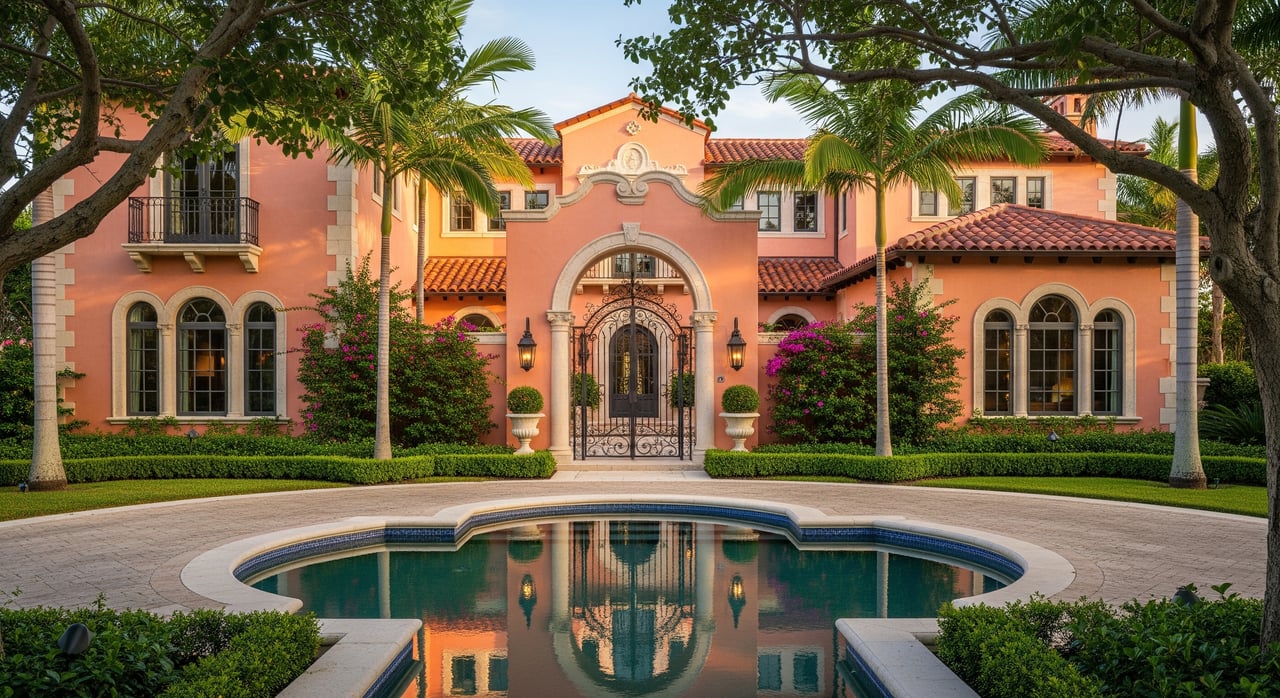
How much cash will you really need to close on a home in Coral Gables? If you are budgeting beyond your down payment, the mix of lender fees, taxes, title charges, insurance, and association costs can feel like a maze. You want clear numbers, local customs, and a simple plan so you can close with confidence. In this guide, you will learn what Coral Gables buyers typically pay, who usually pays what in Miami-Dade, and the key steps to keep your closing on track. Let’s dive in.
Closing costs, in plain English
Closing costs are the fees and prepaids you pay to complete your purchase, separate from your down payment. They include lender charges, title and recording fees, government taxes, inspections, prepaid insurance and taxes, and any HOA or condo fees.
As a rule of thumb, buyers often pay about 2% to 5% of the purchase price in closing costs, depending on your loan, the property type, and what you negotiate in the contract. Title companies often act as the closing agent in Florida, and many items are negotiable, so confirm every line in writing.
Who pays what in Miami-Dade
Local custom in South Florida often has the seller paying for the owner’s title insurance policy, while buyers typically pay for the lender’s title policy and closing/underwriting charges. This is custom, not law, and it must be spelled out in your purchase contract.
Documentary stamp tax on the deed is imposed under Florida law. Who pays is negotiable in the contract, though many transactions allocate it to the seller. Always confirm these allocations with your agent, lender, and title company before you finalize terms.
Typical buyer fees in Coral Gables
Below is what most buyers see on their Closing Disclosure. Your amounts will vary by loan, property, and negotiations.
Loan and lender fees
- Origination, underwriting, and processing fees. Many lenders quote these as a percentage of the loan amount or flat fees. Ask for a full breakdown on your Loan Estimate.
- Credit report and application fees. These are usually modest.
- Appraisal. Most lenders require one. Costs vary by property type and complexity.
- Survey. Some lenders require a survey; price depends on whether a prior survey is acceptable or a new one is needed.
- Mortgage insurance. FHA loans include an upfront mortgage insurance premium, and conventional loans with less than 20% down often require private mortgage insurance.
Title, escrow, and closing agent
- Title search and exam. The title company researches the property’s chain of title and any liens.
- Lender’s title insurance. Required by lenders to protect their interest in the property.
- Owner’s title insurance. Protects you as the buyer. In many Miami-Dade deals the seller pays this, but it is negotiable.
- Closing/settlement fees. Charged by the title company for handling the closing, wire processing, and related services.
Government taxes and recording
- Documentary stamp tax on the deed. In Florida, the common rate is $0.70 per $100 of the purchase price. In many transactions the seller pays this, but it is negotiable.
- Mortgage-related taxes. New mortgages are typically subject to a doc stamp on the promissory note and an intangible tax of 2 mills (0.002) of the loan amount.
- Recording fees. Miami-Dade charges per-page fees and indexing for recording deeds and mortgages. Your title company will estimate these based on document length.
Property taxes and escrows
- Tax proration. Florida property taxes are paid in arrears. At closing, taxes are prorated between buyer and seller based on the closing date.
- Initial escrow deposits. If your lender escrows, plan for several months of property taxes and insurance to fund the account.
HOA and condominium items
- Estoppel letters. Associations provide account status letters that confirm dues and any assessments. These often run $100 to $400 or more, depending on the association.
- Transfer fees. Many associations charge a transfer or onboarding fee when the unit changes hands.
- Special assessments. Review any pending or approved assessments before you remove contingencies.
Inspections and due diligence
- General home inspection. A few hundred dollars is common, varying with size and complexity.
- Wind mitigation and four-point inspections. Often required by insurers for older homes and some condos.
- WDO (termite) inspection. Common in South Florida and often required by lenders and insurers.
- Other inspections as needed. Examples include mold, lead-based paint, or flood elevation certificates.
Prepaids and insurance
- Homeowner’s insurance. Most lenders require proof of a paid first-year premium at closing.
- Flood insurance. Required if the home is in a lender-determined flood zone.
- Prepaid mortgage interest. You will prepay interest from closing through the end of that month.
How much to budget: simple examples
These examples are illustrative to help you plan. Your lender and title company will provide exact numbers.
- At a $500,000 purchase price, buyer closing costs often fall around 2% to 5%, or roughly $10,000 to $25,000, excluding your down payment. If you finance, add mortgage-related taxes like the intangible tax at about 0.2% of the loan amount and note fees that vary by lender.
- At a $1,000,000 purchase price, a 2% to 5% range means $20,000 to $50,000 in buyer costs. The size and type of property, association charges, and your loan program can shift where you land in that range.
Negotiated credits and local custom on title insurance can move your total up or down. The most accurate estimate comes from comparing your Loan Estimate to your final Closing Disclosure.
Condo buyers: post‑Surfside essentials
If you are buying a condo in Coral Gables or greater Miami-Dade, take a closer look at the building’s financials and structure.
- Request current reserve studies, engineering reports, and recent structural inspections.
- Review association minutes for planned repairs or capital projects.
- Ask for details on any approved or potential special assessments and how they will be handled at closing.
- Confirm whether required inspections have been completed and whether reserves meet updated standards.
Your closing timeline
Here is the flow most financed buyers experience in Florida:
Early: application and Loan Estimate
- Within three business days of your mortgage application, your lender must send a Loan Estimate that outlines rates, loan terms, and estimated closing costs.
Midway: inspections, title, and insurance
- Complete inspections during your due diligence period and review the title commitment when it arrives.
- Shop homeowner’s and flood insurance early. Insurer requirements and premiums can affect your final number to close.
Final week: Closing Disclosure and walk‑through
- Your lender must deliver the Closing Disclosure at least three business days before closing. Compare it line by line to your Loan Estimate and ask questions about any differences.
- Do your final walk-through 24 to 48 hours before closing to confirm agreed repairs and property condition.
Closing day: funds and documents
- Bring a government photo ID and follow the title company’s instructions for certified funds or a bank wire. Always verify wiring instructions by telephone using a known, independently verified number.
Red flags to watch
- Unverified wire instructions. If wiring details change by email, call your title company using a known phone number before sending funds.
- Missing or unclear condo reserves and inspections. Ask for reserve studies, current engineer reports, and association minutes before you waive contingencies.
- Big variances between the Loan Estimate and Closing Disclosure. Ask your lender and title company to explain differences before you sign.
What to bring on closing day
- Valid government-issued photo ID.
- Certified funds or confirmed wire for the cash to close, per the title company’s final instructions.
- Proof of homeowner’s insurance binder (and flood insurance if required).
- Any lender-required documents still outstanding.
Quick tips to lower or control costs
- Compare lender fee sheets early and ask about rate‑cost tradeoffs.
- Confirm in your offer who will pay for owner’s title insurance, recording fees, and the deed doc stamp tax.
- Close later in the month to reduce prepaid interest, if it fits your schedule.
- Ask your lender how escrow requirements and rate options affect cash to close.
Ready to move fast in Coral Gables?
You deserve a clean, predictable path to the closing table. If you want help building a precise closing budget, negotiating who pays what, or coordinating inspections and insurance, connect with a local pro who moves at speed. Reach out to Andres Sanchez for buyer representation and trusted financing referrals so you can close with confidence.
FAQs
How much do Coral Gables buyers usually pay at closing?
- Most buyers can expect about 2% to 5% of the purchase price in closing costs, excluding the down payment, with exact amounts based on loan type, property, and negotiated credits.
Who typically pays for owner’s title insurance in Miami-Dade?
- Local custom often has the seller paying for the owner’s title policy, while buyers pay the lender’s policy and settlement fees, but it must be written into the contract.
What Florida taxes affect my mortgage and deed?
- Florida imposes documentary stamp tax on deeds and charges an intangible tax of 0.002 of the loan amount on new mortgages; allocations are negotiable and confirmed in the contract.
When will I receive my Closing Disclosure before closing?
- Your lender must provide the Closing Disclosure at least three business days before closing so you can review final costs and compare them to your Loan Estimate.
What condo issues should I review post‑Surfside?
- Ask for reserve studies, engineering and structural inspection reports, association minutes, and details on any pending or approved special assessments before you remove contingencies.